
Blog
How to Choose a Gas Detector for Home or Work

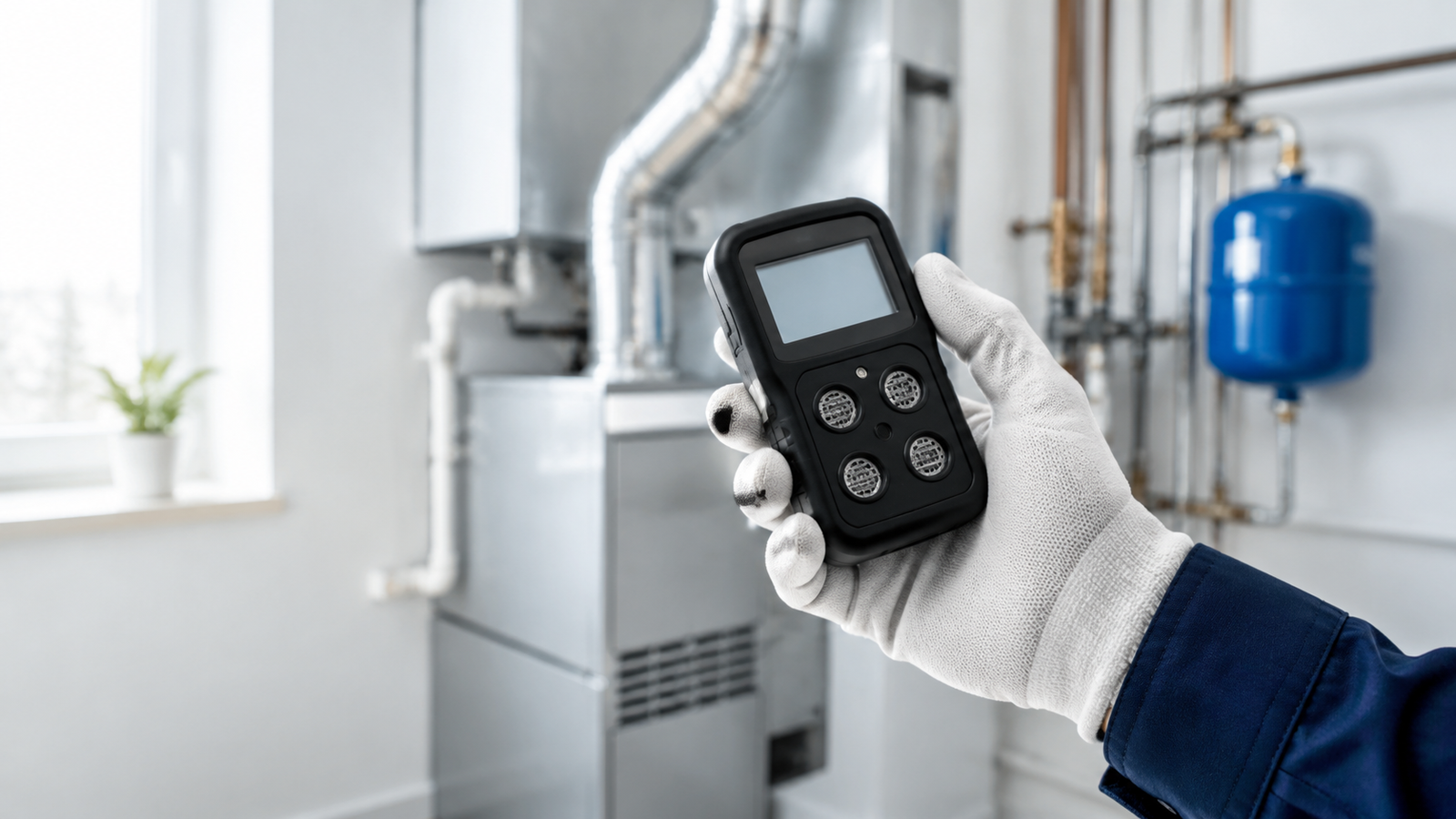
A gas detector is useful only when it is designed for the hazard you need to detect. A carbon monoxide alarm, a combustible-gas leak detector, and a four-gas workplace monitor may all be described as gas detectors, but they are not interchangeable.
Begin with a hazard assessment: identify the gas or atmospheric condition, where it may occur, the concentration range of concern, and who will respond to an alarm. Then choose the sensor configuration and operating features that fit that scenario.
1. Identify the Target Hazard
- Carbon monoxide (CO): produced by incomplete combustion and impossible to detect reliably by smell. Residential CO alarms and workplace personal monitors serve different roles.
- Combustible gases and vapors: instruments may display a percentage of the lower explosive limit (LEL). Confirm the detector is appropriate for the expected gas and environment.
- Oxygen deficiency or enrichment: important in confined spaces and some industrial processes. Oxygen conditions can also affect the behavior of other sensors.
- Toxic gases: hydrogen sulfide, ammonia, chlorine, sulfur dioxide, and other hazards require the correct gas-specific sensor and range.
- Volatile organic compounds (VOCs): a photoionization detector can indicate many VOCs, but response factors and limits vary by compound.
Do not assume that one detector senses every gas. Read the sensor list, measurement range, resolution, alarm thresholds, and cross-sensitivity information for the exact model.
2. Separate Home Alarms from Workplace Monitors
For the home
A fixed residential alarm is designed to remain in place and warn occupants. For carbon monoxide, the U.S. Centers for Disease Control and Prevention recommends battery-operated or battery-backup detectors near every sleeping area and advises replacement according to the manufacturer’s instructions.
A home CO alarm is not automatically a natural-gas, propane, smoke, or multi-gas detector. Choose a listed product specifically designed for each hazard and installation location. Follow the manufacturer’s placement instructions, because height, distance from appliances, airflow, humidity, and outdoor exposure can affect suitability.
For the workplace
Portable direct-reading monitors may be worn by a worker, used for area checks, or used before and during confined-space entry. OSHA notes that these instruments are used for toxic gases, combustible atmospheres, and oxygen deficiency or enrichment. The selected detector must match the hazard assessment and applicable workplace procedures.
3. Compare the Features That Matter
- Sensor configuration: single-gas units are focused and simple; multi-gas monitors cover several defined hazards but require care for every installed sensor.
- Alarm presentation: audible, visual, and vibration alarms improve noticeability in noisy, dark, or high-activity settings.
- Display and logging: real-time concentration, peak values, time-weighted readings, and downloadable logs can support professional programs.
- Battery system: compare operating time, charge time, replaceability, low-battery warning, and performance in cold conditions.
- Environmental rating: check temperature, humidity, ingress protection, drop resistance, and any hazardous-location approval required for the site.
- Pump or diffusion sampling: pumped instruments can draw a remote sample through tubing; diffusion instruments monitor the air around the device.
- Serviceability: confirm sensor life, replacement cost, calibration gas availability, filters, tubing, chargers, and manufacturer support.
4. Plan for Bump Testing and Calibration
A detector should not be trusted only because it powers on. A bump test exposes the instrument to a known gas to verify that the sensors respond and the alarms activate. Calibration adjusts the instrument’s response against a known, traceable gas concentration.
OSHA’s safety bulletin incorporates a recommendation to verify the operational capability of direct-reading portable gas monitors before each day’s use, with additional testing as necessary. It also emphasizes following manufacturer guidance, checking calibration-gas expiration dates, and keeping calibration records.
| Buying question: Before purchasing, ask who will perform bump tests and calibration, what gas cylinders and regulators are required, how results will be recorded, and what happens when a detector fails. |
5. Match the Detector to the Work Environment
A detector used in a clean mechanical room has different requirements from one used in a sewer, mine, refinery, freezer, or dusty construction area. Consider how the detector will be worn, whether gloves must operate the controls, whether the display can be read in sunlight, and whether the unit can survive normal impacts and moisture.
For confined spaces or complex hazards, product selection should be part of a formal safety program led by a qualified person. The monitor does not replace ventilation, isolation, respiratory protection, training, permits, or emergency planning.
What to Do When an Alarm Sounds
Treat an alarm as a real warning unless an established procedure and qualified person determine otherwise. Follow the site or manufacturer emergency procedure. For a residential carbon monoxide alarm, leave the area, move to fresh air, and contact emergency services or the appropriate local authority. Do not re-enter until responders say it is safe.
| Important safety note: Never use odor, symptoms, or a single consumer detector as the only basis for declaring an atmosphere safe. Gas hazards can be immediately dangerous, and sensor response depends on the target gas, calibration, environment, and maintenance. |
Final Checklist
- Identify every target gas or atmospheric condition.
- Choose a home alarm or workplace monitor designed for that purpose.
- Confirm ranges, alarms, cross-sensitivities, and environmental ratings.
- Plan power, charging, bump testing, calibration, and recordkeeping.
- Verify applicable certifications, standards, and workplace requirements.
- Train users on operation and emergency response.
| Suggested CTA: Explore gas detectors by target gas, sensor configuration, and intended environment. |