
Blog
Fuel Cell vs. Semiconductor Breathalyzers: Key Differences Explained

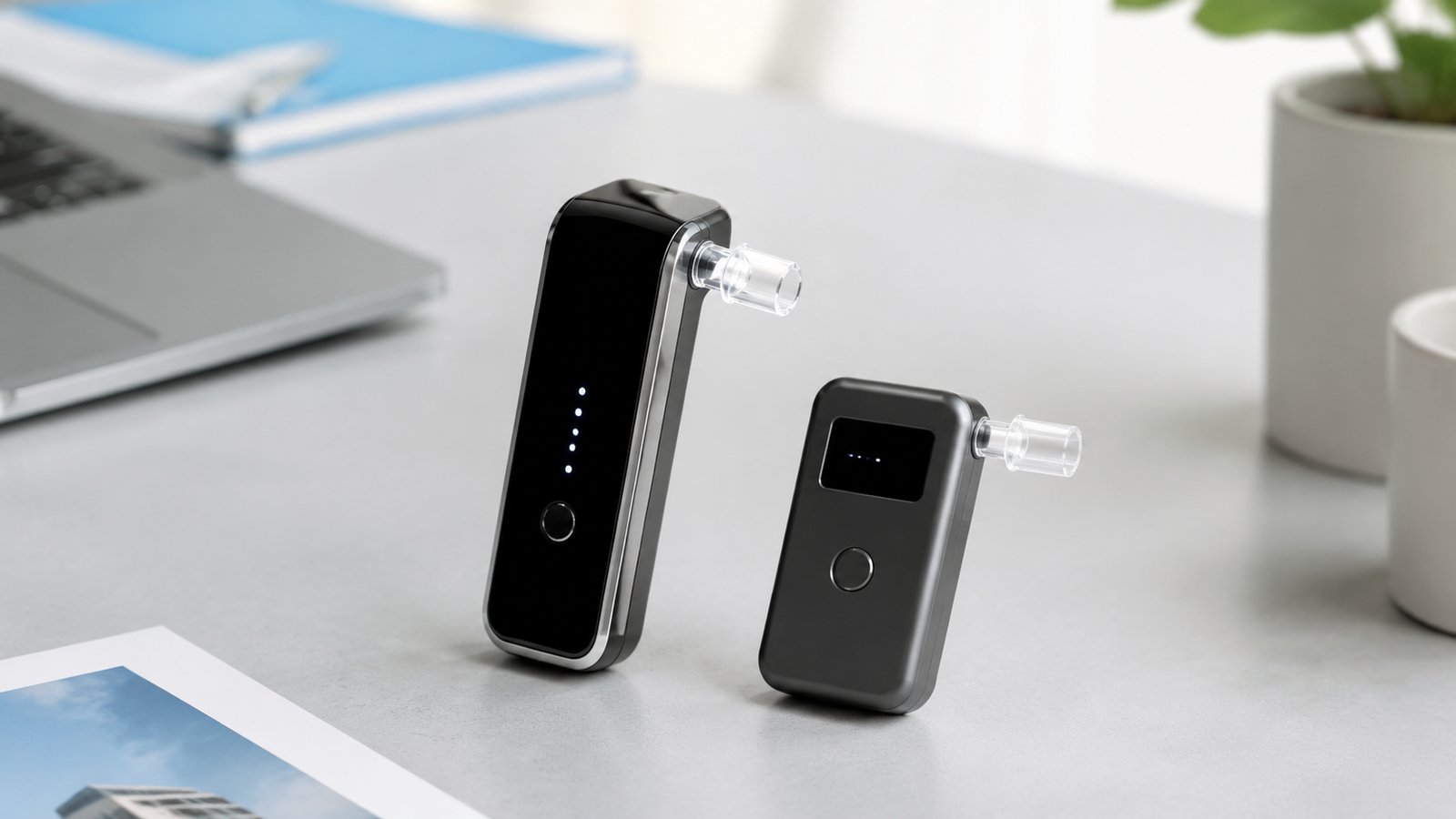
Fuel cell and semiconductor breathalyzers can look almost identical from the outside, yet their sensing methods and ownership experience can be quite different. Understanding those differences makes it easier to choose a device for occasional personal checks, repeated screening, or professional use.
The sensor is only one part of the instrument. Sampling design, software, calibration, temperature compensation, quality control, and operator technique all influence the result. A strong buying decision considers the complete device.
How a Fuel Cell Sensor Works
A fuel cell breathalyzer uses an electrochemical sensor. Ethanol in the breath sample is oxidized at an electrode, producing an electrical signal related to the amount of alcohol presented to the sensor.
In practical use, fuel cell technology is generally valued for ethanol selectivity, stable repeated measurements, and suitability for higher-frequency screening. Fuel cell sensors are common in many professional portable units and ignition-interlock systems.
How a Semiconductor Sensor Works
A semiconductor breathalyzer uses a heated sensing material whose electrical resistance changes when exposed to alcohol and certain other volatile compounds. The electronics interpret that change as a breath alcohol result.
This approach can support smaller and lower-cost products. However, performance can vary more from model to model, and the sensor may be more affected by environmental conditions or interfering vapors. Some products use a replaceable, pre-calibrated sensor module instead of requiring the entire device to be sent for service.
Side-by-Side Comparison
| Feature | Fuel Cell | Semiconductor |
| Typical positioning | Premium personal, workplace, professional, and repeated screening | Entry-level or occasional personal screening |
| Alcohol selectivity | Generally more selective to ethanol | May respond to a wider range of volatile compounds |
| Repeat testing | Often better suited to frequent consecutive tests | Recovery time and consistency vary by model |
| Calibration stability | Often retains calibration longer under normal use | May require more frequent service or sensor-module replacement |
| Warm-up | Usually brief, depending on model | Heated sensor may require a longer warm-up |
| Purchase price | Usually higher | Usually lower |
| Best fit | Users prioritizing repeatability and service life | Budget-conscious users testing occasionally |
These are general tendencies, not guaranteed specifications. Always compare the published requirements for the exact model.
Which Sensor Is Better for Your Use Case?
Choose fuel cell when consistency is the priority
Fuel cell models are usually the stronger choice when several people will be tested, results must be repeated under a controlled procedure, or the unit will be used frequently. The higher purchase price may be offset by a more suitable workflow and longer intervals between calibration services, depending on the model.
Choose semiconductor when use is occasional
A semiconductor model can be practical for basic personal awareness when the user understands its limitations, follows the instructions carefully, and keeps up with calibration or sensor replacement. It can also be a sensible entry point when portability and price matter more than high testing volume.
What Matters More Than the Sensor Label
- Published performance: look for a stated range, tolerance, and operating temperature rather than vague claims such as “professional accuracy.”
- Sample control: flow detection, countdown guidance, and clear error messages help produce consistent samples.
- Calibration support: confirm the recommended schedule, service location, turnaround time, and cost.
- Consumables: check the price and availability of mouthpieces, batteries, charging cables, and sensor modules.
- Test recovery time: if several users will be screened, confirm the interval between tests.
- Quality evidence: regulatory listing or independent performance documentation can be more informative than sensor terminology alone.
NHTSA’s conforming products materials provide a useful example: both fuel cell and semiconductor devices have appeared on its alcohol screening device list after evaluation against the relevant model specifications. That does not mean every consumer device is approved or suitable for evidential use; it shows why whole-device performance matters.
Calibration Is Required for Both
All sensor technologies change with age, exposure, storage, and use. Follow the manufacturer’s calibration interval and do not wait for an obviously incorrect result. If a device is used in a formal program, keep service records and establish a process for removing an overdue or failed unit from use.
A replaceable sensor module can simplify maintenance, but it is not maintenance-free. Confirm whether the module arrives calibrated, how long it remains valid, and whether the device requires any reset or verification procedure after installation.
| Important safety note: Neither sensor type can determine whether driving is safe. Breath test results can be affected by timing, sampling, calibration, and individual circumstances. Never use a personal reading as permission to drive after drinking. |
Bottom Line
Choose a fuel cell breathalyzer when repeated use, ethanol selectivity, and a more professional workflow justify the higher cost. Choose a semiconductor breathalyzer for occasional personal screening when budget is the main constraint and you are prepared to follow its operating and maintenance requirements closely.
| Suggested CTA: Compare our fuel cell and semiconductor breathalyzers by sensor type, calibration plan, and intended testing volume. |